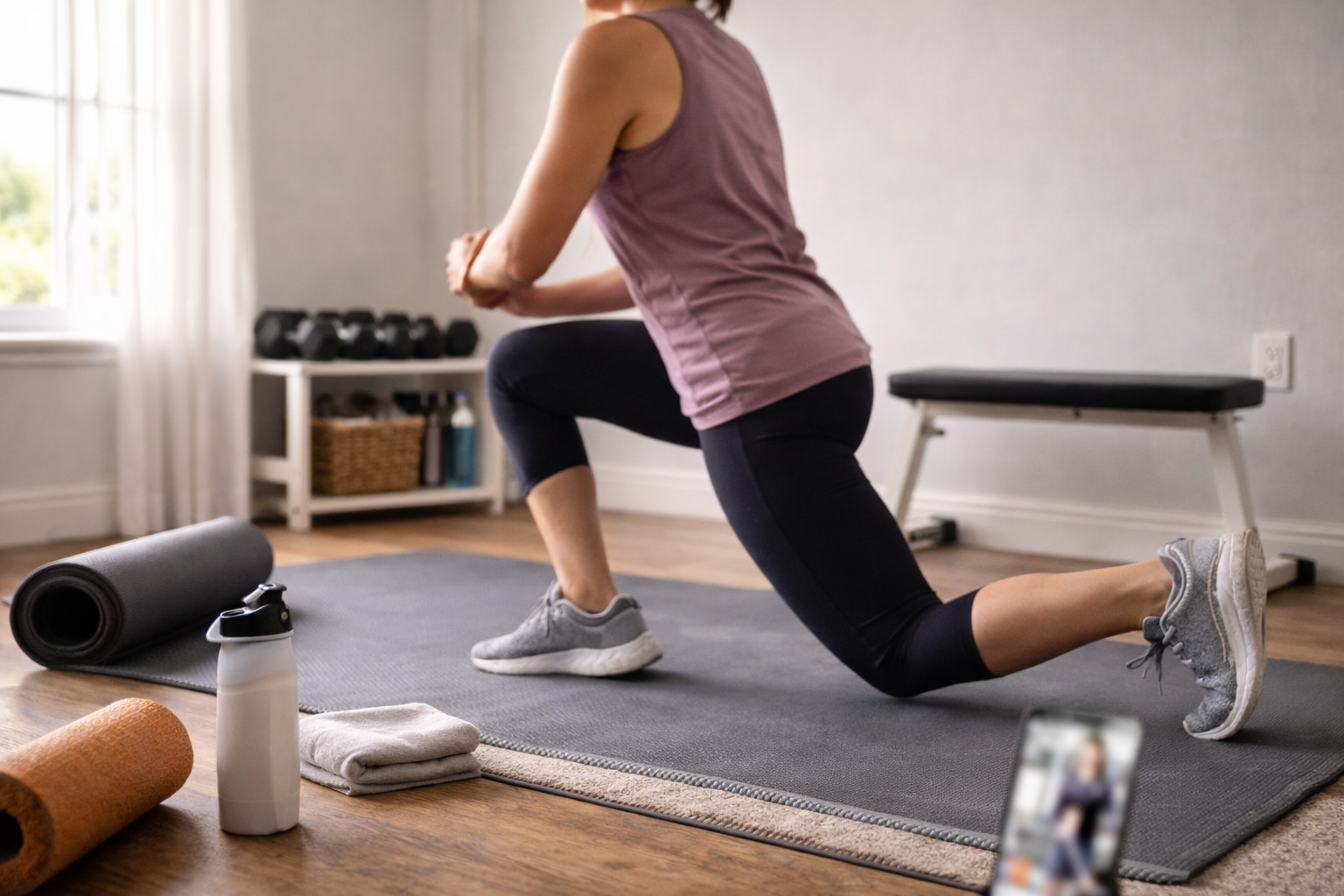
Starting a home workout safely means thinking beyond just the exercises themselves.
Small, consistent habits around warm-up, layout, and recovery reduce strain and setbacks.
This article breaks down practical adjustments you can make without specialty gear.
Follow a few organized steps and you can keep progress steady while lowering injury risk.
Adapting these principles fits any experience level and available time.
Warm-up and movement prep
Begin each session with a focused warm-up that raises heart rate and mobilizes joints. Dynamic movements such as leg swings, arm circles, and controlled lunges prepare muscles and nervous systems for load. Spend five to ten minutes and scale intensity toward the workout rather than jumping in cold. Include sport-specific drills when applicable to prime neural patterns. This reduces sudden strain and improves coordination, minimizing common acute injuries.
Make warm-up progression routine-specific and consistent. Consistency matters more than duration.
Space, surfaces, and equipment
Assess the area you train in for hazards and enough room to move safely. Clear trip risks, choose a stable surface, and ensure footwear matches the activity. Use mats for cushioning and avoid slippery floors to protect joints during impact work. Ensure good lighting and ventilation to maintain focus and comfort during sessions. Even modest investments like a good mat or stable bench can greatly reduce accident risk.
- Minimum 6 feet clear for dynamic moves.
- Floor firmness and grip tested before heavy sets.
- Secure weights away from walkways.
Re-evaluate layout whenever routines change. Small adjustments prevent many common mishaps.
Recovery and gradual progression
Plan recovery into weekly routines to let tissues adapt and to avoid overuse injuries. Alternate intensity, include mobility days, and prioritize sleep and hydration as part of recovery. Progress load gradually using conservative benchmarks to avoid sudden jumps that overwhelm tendons or joints. Use targeted stretching and soft-tissue work to address recurring tightness. When pain alters movement quality, reduce intensity and seek guidance if it persists.
Track progress and adjust rest accordingly. Recovery is as much a training tool as exercise.
Technique and monitoring
Focus on movement quality more than load; clean technique distributes forces safely. Use mirrors, phone video, or a training partner to check alignment and symmetry during exercises. Quiet, controlled repetitions and proper breathing reduce compensatory patterns that lead to injury. If strength or balance is lacking, regress exercises rather than forcing progression. Regularly reassess technique as you add weight or complexity to a routine.
Prioritize form and slow progression to build reliable movement patterns. Good technique is the best short-term and long-term injury prevention strategy.
Conclusion
Implementing smarter warm-ups, safe layouts, and planned recovery cuts injury risk.
These measures keep training consistent and sustainable over time.
Start small and build habits that protect your body while you progress.