When you train at home, food choices and timing shape how you feel during a session and how quickly you recover afterward. Small adjustments to snacks and simple meal composition can deliver steady energy without elaborate cooking or complex plans. This article focuses on practical, everyday approaches that fit busy schedules and modest kitchens. Read on for straightforward strategies that support consistency and progress.
Snack Timing for Energy and Recovery
Effective snack timing balances fueling performance and enabling recovery without causing digestive discomfort. Aim for a small carbohydrate-plus-protein snack about 30–90 minutes before a workout to sustain energy and prevent mid-session fatigue. After training, prioritize a snack with protein and some carbs within an hour to support muscle repair and replenish glycogen stores. Hydration and electrolyte balance also influence how snacks feel and perform, so pair food with fluids.
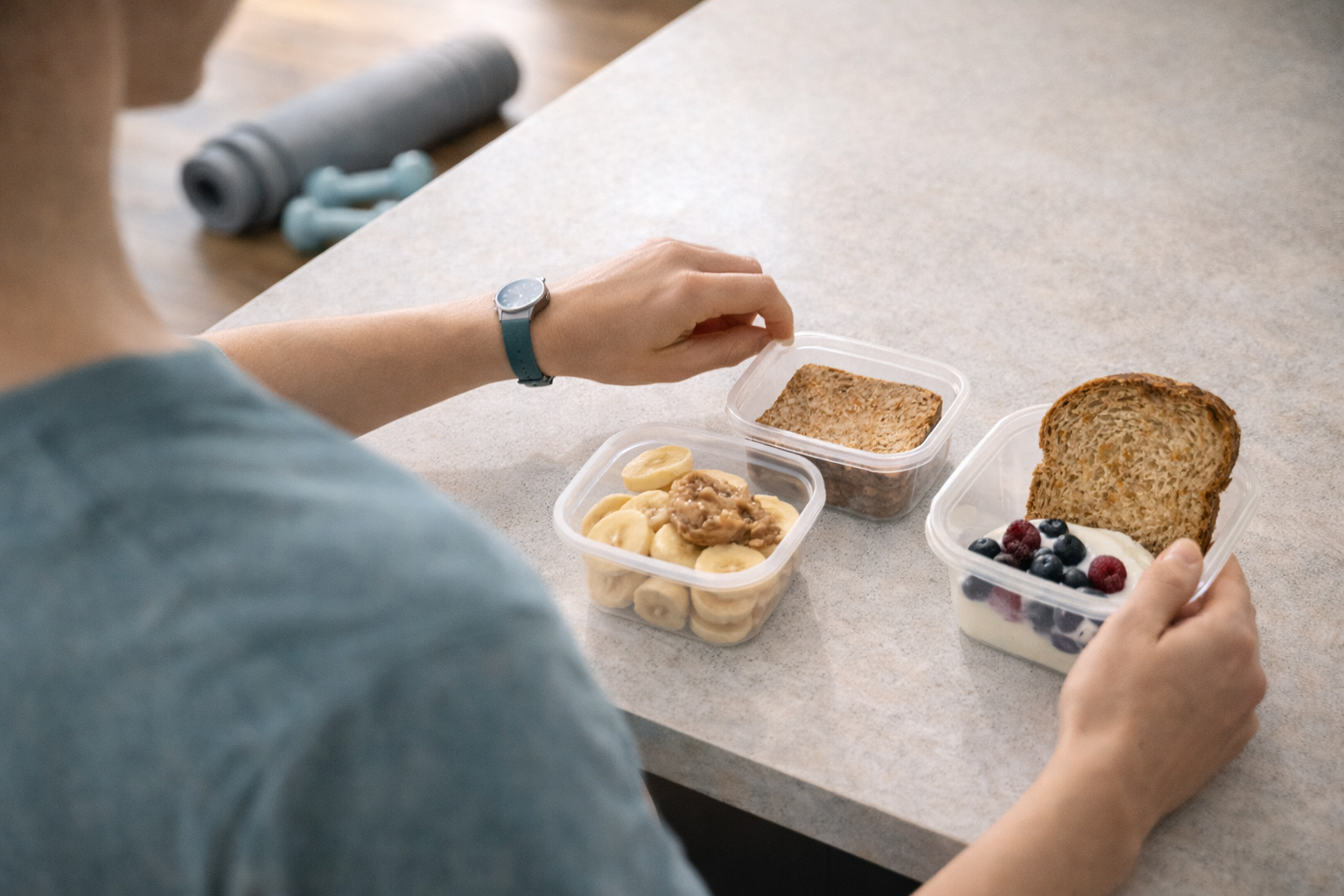
- Pre-workout: banana with a spoon of nut butter.
- Post-workout: yogurt with berries or a small cottage cheese bowl.
- Quick option: whole-grain toast with sliced turkey or hummus.
These options are easy to prepare and adapt to personal tastes. Keep portions moderate to match the intensity and duration of each session.
Simple Meal Composition for Strength and Stamina
A balanced plate supports both strength-focused and endurance-style home workouts. Combine a lean protein source, a fibrous vegetable, and a whole-grain or starchy vegetable to create steady energy release and muscle support. Include healthy fats in moderation; they slow digestion, which is useful for longer sessions but less ideal right before intense intervals. Consistent meal timing across the day reduces the need for large snacks and helps maintain performance.
Simplicity is the key: batch-cook a protein, steam vegetables, and roast a starch to mix and match. This approach makes it easier to assemble well-rounded meals in minutes and avoid processed convenience choices that lack recovery-supporting nutrients.
Practical Grocery and Prep Habits
Stock a few versatile staples that combine quickly into nourishing meals and snacks. Choose shelf-stable options like canned beans and whole grains, refrigerated proteins like eggs or yogurt, and frozen vegetables and fruits for convenience. A short prep routine—chopping vegetables, portioning snacks, and labeling containers—reduces decision fatigue on busy days and supports consistent eating patterns that match workout schedules.
- Staples: oats, canned tuna, frozen spinach.
- Prep ideas: portion snack packs, pre-cook grains, marinate proteins.
- Keep a visible snack station to avoid empty-calorie choices.
Small systems save time and make healthy choices the default. Over weeks, these habits compound into better energy for training and faster recovery between sessions.
Conclusion
Prioritize simple snacks and balanced plates timed around your workouts. Build a few prep habits and keep versatile staples on hand. Small, consistent choices produce steady gains and make home training more sustainable.