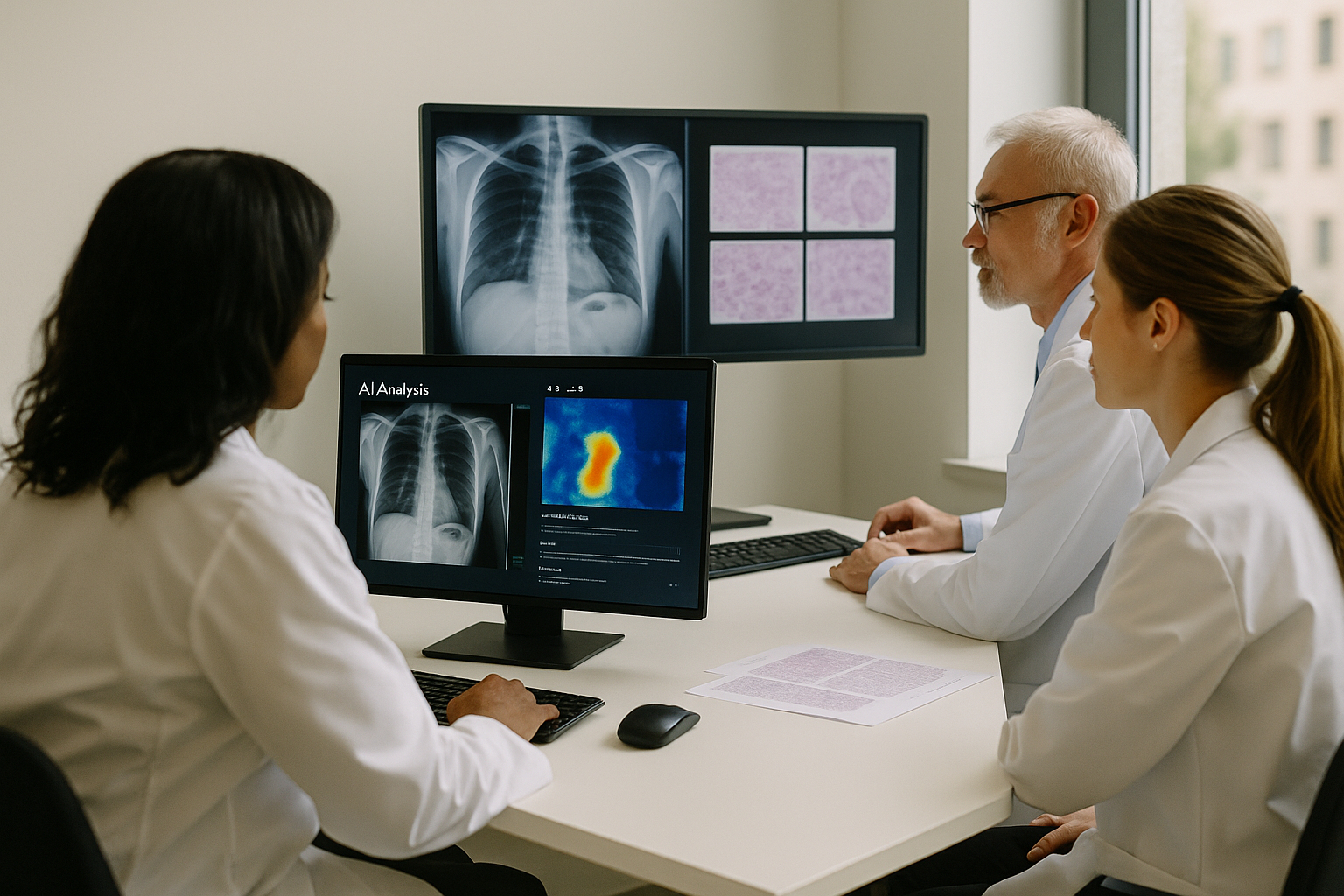
Artificial Intelligence (AI) is transforming healthcare, and nowhere is this more evident than in radiology and pathology—the two pillars of medical diagnosis. These fields rely heavily on image interpretation, pattern recognition, and precision—areas where AI excels. By automating routine tasks and enhancing diagnostic accuracy, AI is helping doctors detect diseases earlier, personalize treatment, and improve patient outcomes.
AI in Radiology: Seeing Beyond the Surface
Radiology generates an enormous amount of data—from X-rays and CT scans to MRIs and ultrasounds. AI algorithms can analyze these images with remarkable speed and accuracy, identifying subtle patterns that even experienced radiologists might overlook. For example, AI can detect early signs of lung cancer, fractures, or cardiovascular disease within seconds.
What makes AI especially valuable is its ability to prioritize urgent cases, allowing radiologists to focus on patients who need immediate attention. In addition, AI-powered imaging tools can compare current scans with historical data, tracking disease progression and treatment effectiveness over time.
AI in Pathology: Precision at the Microscopic Level
Pathologists study tissue samples to diagnose diseases such as cancer. Traditionally, this process required manual slide examination—a meticulous and time-consuming task. AI is revolutionizing pathology by digitizing slides and analyzing them using deep learning models that can detect cancerous cells with exceptional precision.
These tools can identify microscopic changes in cell structure and classify tumor types, providing insights that guide personalized treatment plans. For example, AI systems can assist in grading tumors, predicting outcomes, and even suggesting targeted therapies based on molecular data. This fusion of digital pathology and AI is paving the way for faster, more accurate diagnoses.
Collaboration, Not Replacement
AI isn’t replacing radiologists or pathologists—it’s enhancing their expertise. The technology serves as a powerful assistant, handling repetitive image analyses, flagging anomalies, and reducing diagnostic errors. Doctors retain the final decision-making authority, using AI insights to confirm or refine their interpretations. This collaboration improves efficiency while maintaining clinical judgment and empathy—qualities only humans can provide.
Challenges and Future Potential
Despite its promise, AI in diagnostics faces challenges such as data privacy, regulatory approval, and the need for diverse, unbiased datasets. Integrating AI into existing healthcare systems also requires training, investment, and standardization. However, as technology evolves and trust builds, AI will become an indispensable part of diagnostic medicine—supporting faster, more accurate, and more equitable healthcare delivery.
Conclusion
AI is revolutionizing radiology and pathology by combining computational power with human expertise. From detecting diseases earlier to refining treatment decisions, AI is reshaping the future of diagnostics. The result is a more precise, efficient, and patient-centered healthcare system—one where technology and medicine work hand in hand to save lives.