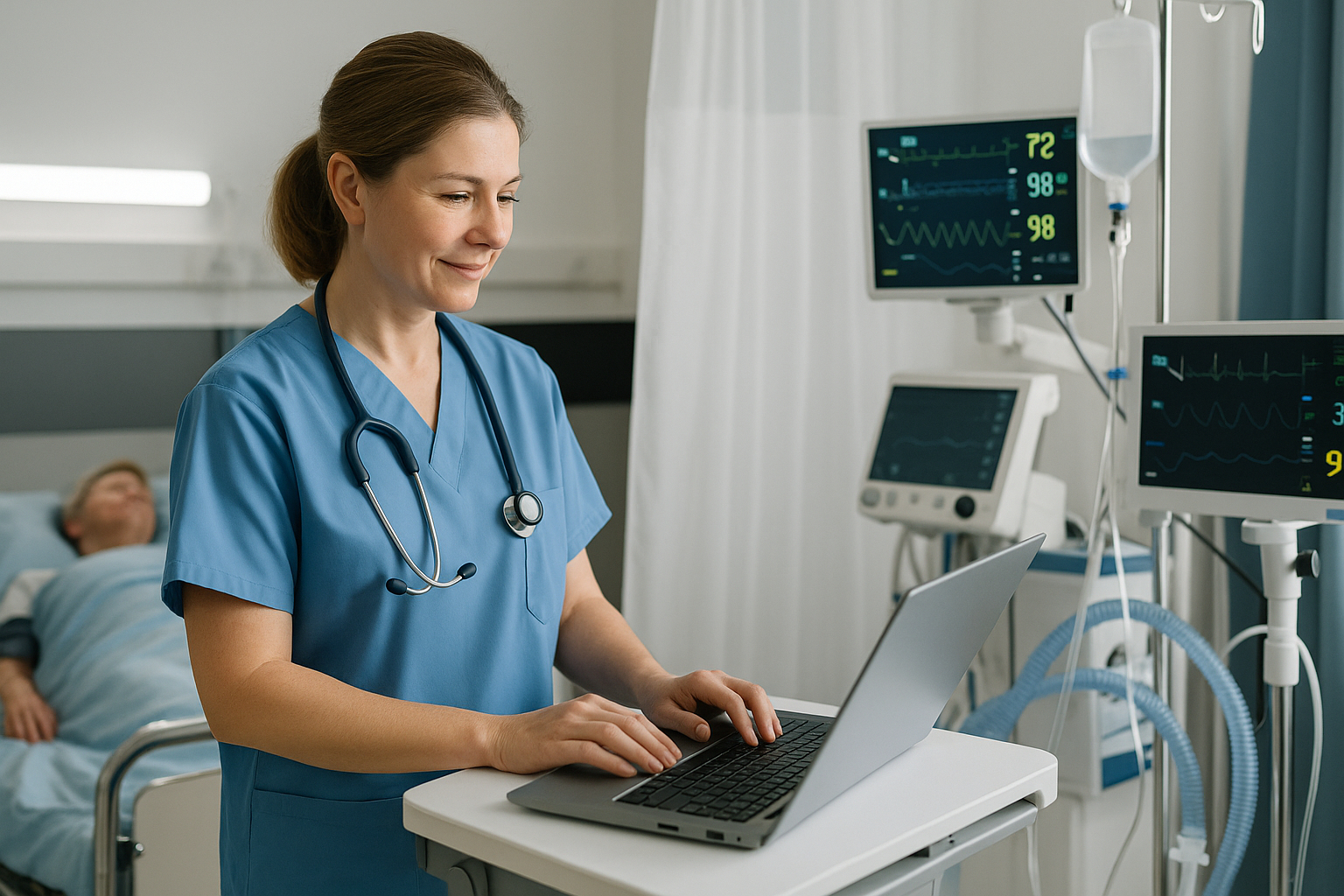
Healthcare is undergoing a digital revolution, and nurses are at the heart of it. Once seen primarily as caregivers, today’s nurses are evolving into tech-savvy professionals who bridge clinical expertise with advanced technology. From telehealth and electronic health records to artificial intelligence and robotics, nurses are shaping the future of patient care by combining compassion with innovation.
Nursing in the Age of Digital Transformation
The integration of technology into healthcare systems has changed the way nurses deliver care. Electronic health records (EHRs) have streamlined documentation, improved data accuracy, and enhanced communication among care teams. Nurses now rely on digital tools to track vital signs, monitor medications, and coordinate care efficiently. As frontline users of these systems, they play a crucial role in ensuring data integrity and quality outcomes.
Telehealth: Nursing Beyond Hospital Walls
Telehealth has expanded access to healthcare like never before, and nurses are leading the charge. Virtual consultations allow nurses to provide patient education, chronic disease management, and post-operative follow-up remotely. This digital shift not only extends care to rural and underserved populations but also empowers patients to take control of their health through continuous engagement. Nurses are now becoming digital communicators, educators, and advocates in a connected healthcare ecosystem.
Artificial Intelligence and Data Analytics
AI and predictive analytics are revolutionizing nursing practice by providing insights that enhance decision-making. Nurses use AI-powered tools to identify patients at risk, monitor symptoms, and customize care plans. Predictive algorithms can alert nurses to early signs of complications, allowing for timely interventions. As interpreters of this data, nurses ensure that technology remains human-centered—turning complex information into compassionate action.
Robotics and Automation in Nursing
Automation is taking on routine tasks, allowing nurses to focus on direct patient care. Robotic assistants now deliver medications, transport equipment, and even assist in surgery. While some worry about technology replacing human touch, the reality is the opposite—robots handle repetitive tasks so nurses can dedicate more time to empathy, education, and clinical judgment.
Upskilling for the Future
As healthcare becomes more digitized, continuous education is essential. Nursing curricula are evolving to include digital literacy, data management, and health informatics. Many nurses are pursuing advanced degrees in healthcare technology or informatics, positioning themselves as leaders in interdisciplinary teams that drive innovation.
Conclusion
The expanding role of nursing in tech-driven healthcare reflects a powerful shift—from caregivers to digital collaborators. By embracing technology without losing their human touch, nurses are redefining patient care for the modern age. The future of healthcare will not just depend on technology—it will depend on the nurses who bring compassion and intelligence together to make it work.