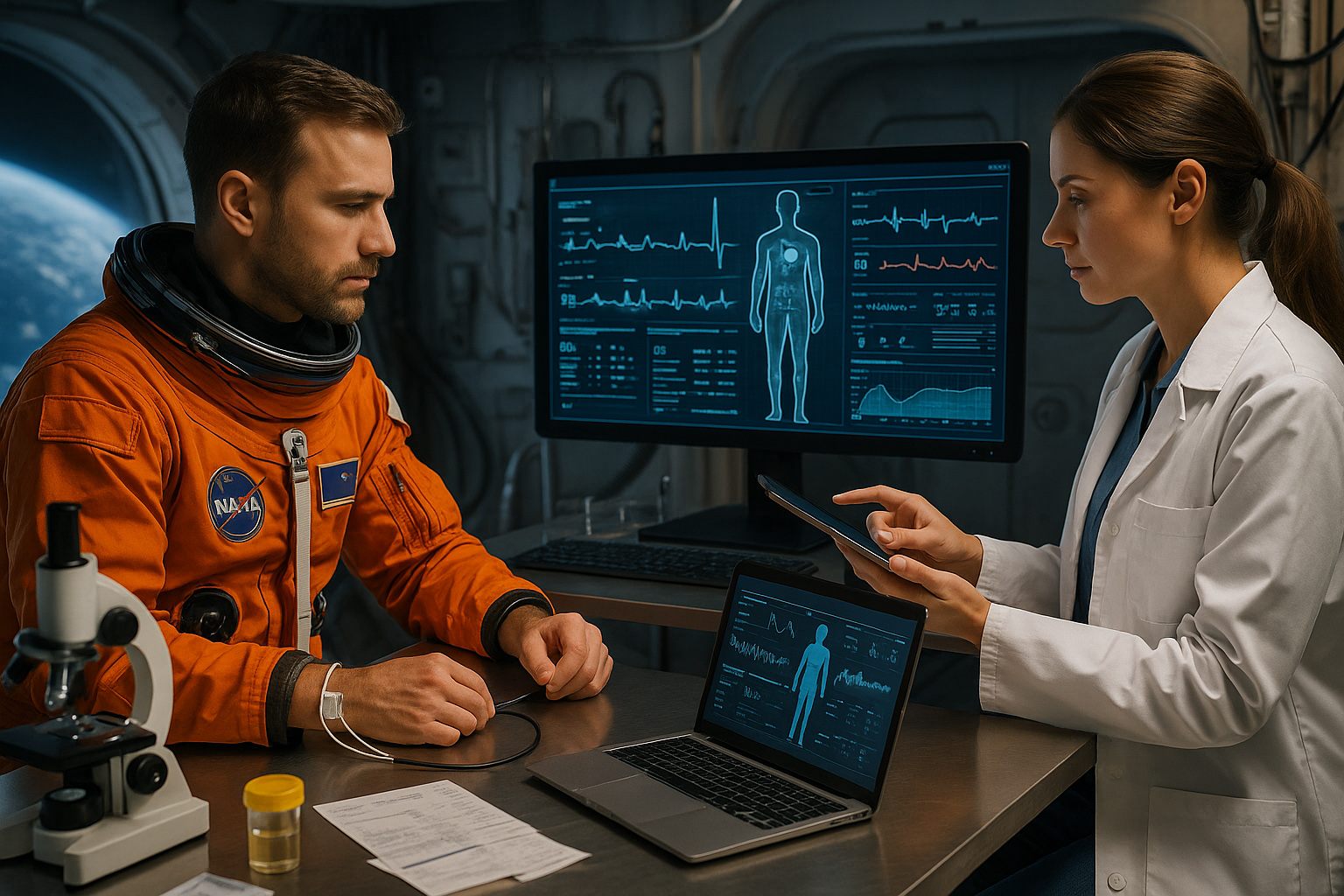
Space exploration has long been a symbol of human curiosity and innovation, but it’s also a frontier for medical science. The study of space medicine—how the human body reacts and adapts to life beyond Earth—has led to groundbreaking discoveries that improve healthcare right here at home. From bone density research to mental health studies, astronauts are not just exploring the cosmos—they’re helping us understand what it means to be human.
The Challenges of Health in Zero Gravity
In space, the absence of gravity affects every system in the body. Muscles weaken, bones lose calcium, and fluids shift toward the head, causing pressure changes that can affect eyesight and brain function. Astronauts follow strict exercise routines and dietary plans to counteract these effects.
These challenges have provided valuable insights into osteoporosis, cardiovascular health, and muscle atrophy. Treatments and preventive measures developed for space travelers are now benefiting elderly patients and those on long-term bed rest here on Earth.
Psychological Resilience in Isolation
Living on the International Space Station (ISS) for months at a time can take a toll on mental health. Astronauts experience isolation, confinement, and disrupted sleep cycles, all of which mirror challenges faced by people on Earth in remote environments or during lockdowns.
NASA and other space agencies have developed training programs focusing on resilience, teamwork, and emotional regulation. These methods are now being adapted for healthcare workers, submariners, and even corporate teams who must perform under high pressure and isolation.
Telemedicine and Remote Health Monitoring
Space missions rely on telemedicine—remote monitoring and diagnosis through advanced technology—to ensure astronauts stay healthy millions of miles from Earth. Tools like wearable sensors, AI-driven diagnostics, and real-time health data transmission have revolutionized healthcare delivery.
These innovations are now shaping modern medicine, especially in rural areas and emergency care, where remote consultations and virtual monitoring save lives. What began as a necessity in orbit is now redefining accessibility in global healthcare.
The Future of Space and Human Health
As missions to Mars and deep space become reality, space medicine will continue to evolve. Scientists are studying genetic resilience, radiation exposure, and the long-term effects of microgravity to ensure human survival in space. These discoveries will not only protect astronauts but also lead to medical advancements in cancer research, rehabilitation, and regenerative medicine.
Conclusion
Space medicine is a reminder that exploration and health are deeply connected. Every step humanity takes beyond Earth expands our understanding of life itself. The lessons astronauts teach us about endurance, adaptability, and innovation continue to shape the future of medicine—both on our planet and beyond the stars.