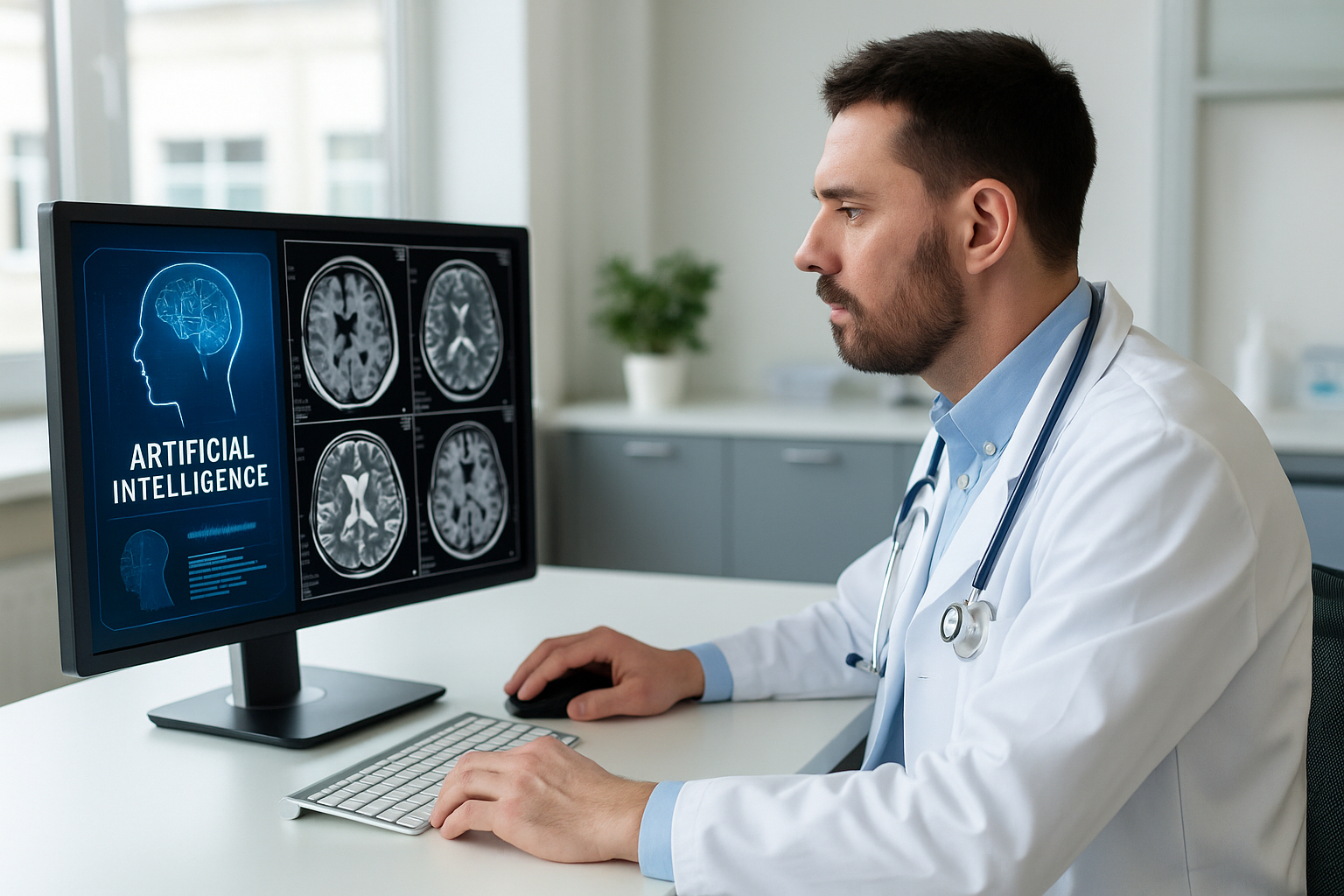
Artificial Intelligence (AI) is transforming modern medicine, reshaping how diseases are detected, diagnosed, and treated. From analyzing complex medical images to predicting patient outcomes, AI has become an indispensable tool for healthcare professionals. By enhancing accuracy, efficiency, and personalization, AI is redefining what’s possible in medical diagnosis and patient care.
The Rise of AI in Healthcare
Over the last decade, AI has evolved from a theoretical concept to a practical force in hospitals and research centers. Algorithms powered by machine learning and deep learning can now process massive datasets — medical scans, lab results, and patient histories — in seconds. This ability to find patterns that might escape the human eye enables doctors to make faster and more precise decisions.
Revolutionizing Disease Detection
One of the most significant contributions of AI lies in medical imaging. Advanced AI systems can detect early signs of diseases like cancer, heart conditions, and neurological disorders with remarkable accuracy.
-
Radiology: AI tools analyze X-rays, MRIs, and CT scans to identify abnormalities such as tumors or fractures.
-
Pathology: Machine learning models help detect cancer cells in biopsy slides faster and with fewer errors.
-
Ophthalmology and Dermatology: AI apps can identify retinal diseases and skin conditions using image-based diagnostics accessible even through smartphones.
These technologies don’t replace doctors but rather act as decision-support systems, enhancing their ability to interpret data and confirm diagnoses.
Predictive and Preventive Medicine
AI doesn’t just detect illness — it predicts it. By analyzing health records and lifestyle patterns, AI models can assess a patient’s risk of developing diseases such as diabetes, heart disease, or Alzheimer’s. This enables preventive care strategies that reduce long-term treatment costs and improve quality of life.
Personalized Diagnosis and Treatment
AI supports precision medicine, tailoring treatment to each patient’s unique genetic and physiological profile. For instance, in oncology, AI helps identify which therapies are most effective for specific tumor types, reducing trial-and-error treatment cycles.
Challenges and Ethical Considerations
Despite its promise, AI in healthcare raises ethical and operational challenges:
-
Data Privacy: Patient information must be securely stored and processed.
-
Bias in Algorithms: AI models trained on limited datasets can produce inaccurate results for underrepresented populations.
-
Human Oversight: While AI provides valuable insights, medical professionals must remain the final decision-makers.
Conclusion
Artificial Intelligence is revolutionizing medical diagnosis by combining speed, accuracy, and insight. It empowers healthcare providers to detect diseases earlier, personalize treatment, and improve patient outcomes. As technology continues to evolve, AI will not replace doctors — but it will make them smarter, faster, and more effective in saving lives.