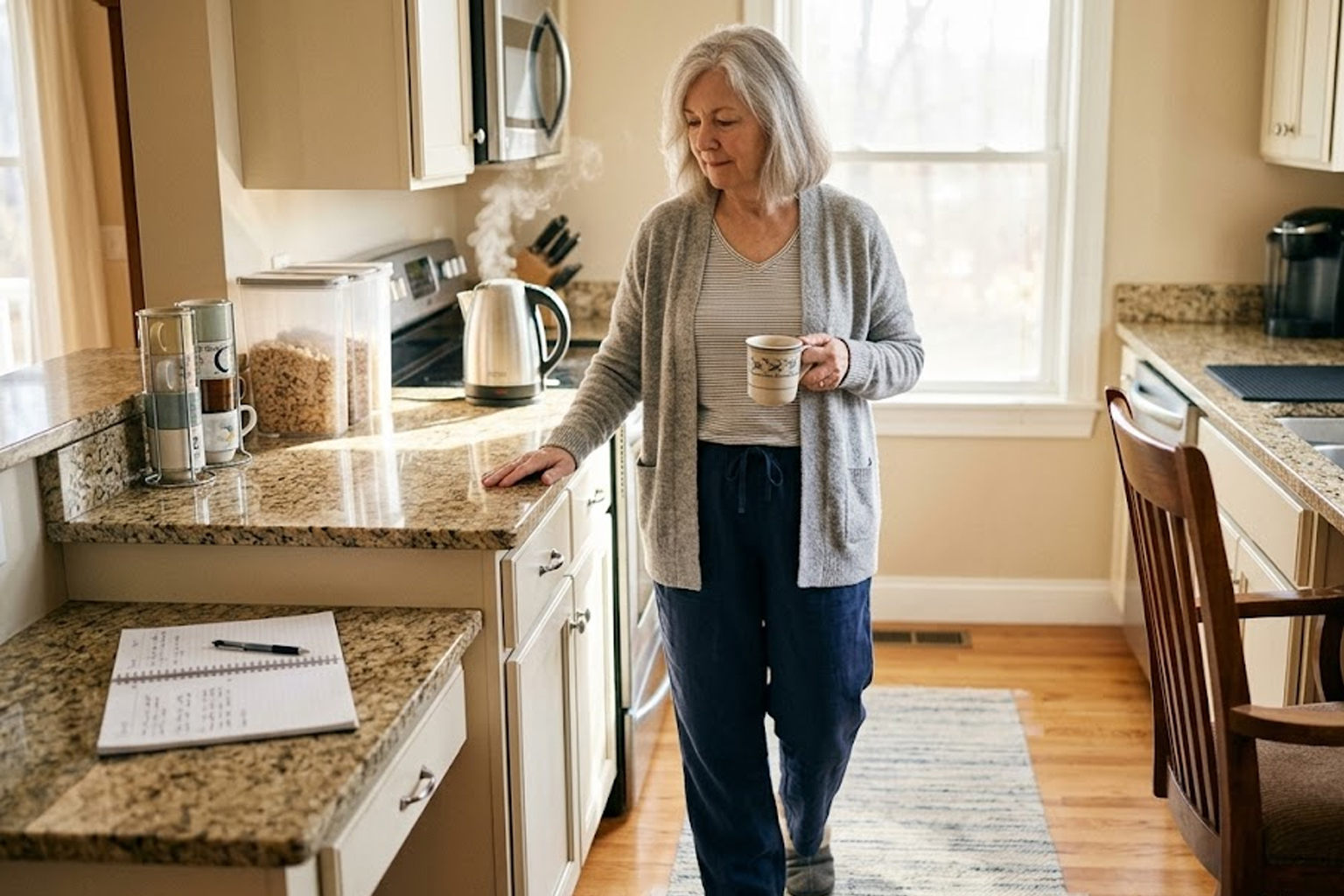
<p>Small, repeated choices at home add up faster than one long workout. Simple shifts in how you move, stand, and sit can protect progress and reduce awkward moments. This piece highlights practical habits you can fold into daily life without special equipment. Read for ideas you can try tomorrow, even between chores.</p>
<h4>Daily micro-movements that help</h4>
<p>Short, frequent movement breaks interrupt stiffness and keep joints familiar with motion. Spend thirty to sixty seconds every hour standing, marching gently in place, or doing controlled side steps to maintain balance and circulation. These mini sessions are easier to commit to than a long routine and reduce the temptation to skip activity on busy days. Over weeks, the accumulated time spent moving can translate into steadier gait and fewer hesitations when you change direction.</p>
<p>Make a habit of linking a movement to an existing routine so it sticks. For example, rise and sit deliberately after each cup of coffee or practice a slow heel-to-toe walk while waiting for the kettle. These small anchors help the habit survive a busy morning.</p>
<h4>Simple changes to make your rooms safer</h4>
<p>Tiny adjustments in the living space remove friction from movement and lower the chance of stumbles. Clear narrow pathways, secure loose rugs, and move frequently used items to waist level so reaching doesn’t force unsafe bending. Lighting matters: brighter, glare-free lamps near stairs and entryways improve depth perception during transitions. These fixes are inexpensive and often take less time than a single workout session.</p>
<ul>
<li>Keep a sturdy chair in the shower area and a non-slip mat nearby.</li>
<li>Place night lighting with a motion sensor near the bed.</li>
<li>Store daily items at arm level to avoid twisting and stretching.</li>
</ul>
<p>Think of the home as a partner in recovery rather than an obstacle course. Small environmental edits let safer movement feel natural rather than forced.</p>
<h4>Progress without pushing past limits</h4>
<p>Progress happens when challenge and comfort are balanced, not when you ignore signals of overuse. Aim for gradual increases in repetition or duration, and pause when pain deviates from normal muscle fatigue. Keep a simple log of what you tried and how it felt; patterns often emerge that guide smarter next steps. Consistency outweighs intensity for long-term gains in confidence and function.</p>
<p>Invite feedback from a trusted clinician when something feels off or when progress stalls. External perspective can help you refine movement choices without turning every day into a test.</p>
<h4>Conclusion</h4>
<p>Small, consistent changes at home support safer movement and steady improvement. Combine brief micro-movements, thoughtful room edits, and measured progress to protect gains. Over time, these habits make moving feel easier and more reliable.</p>