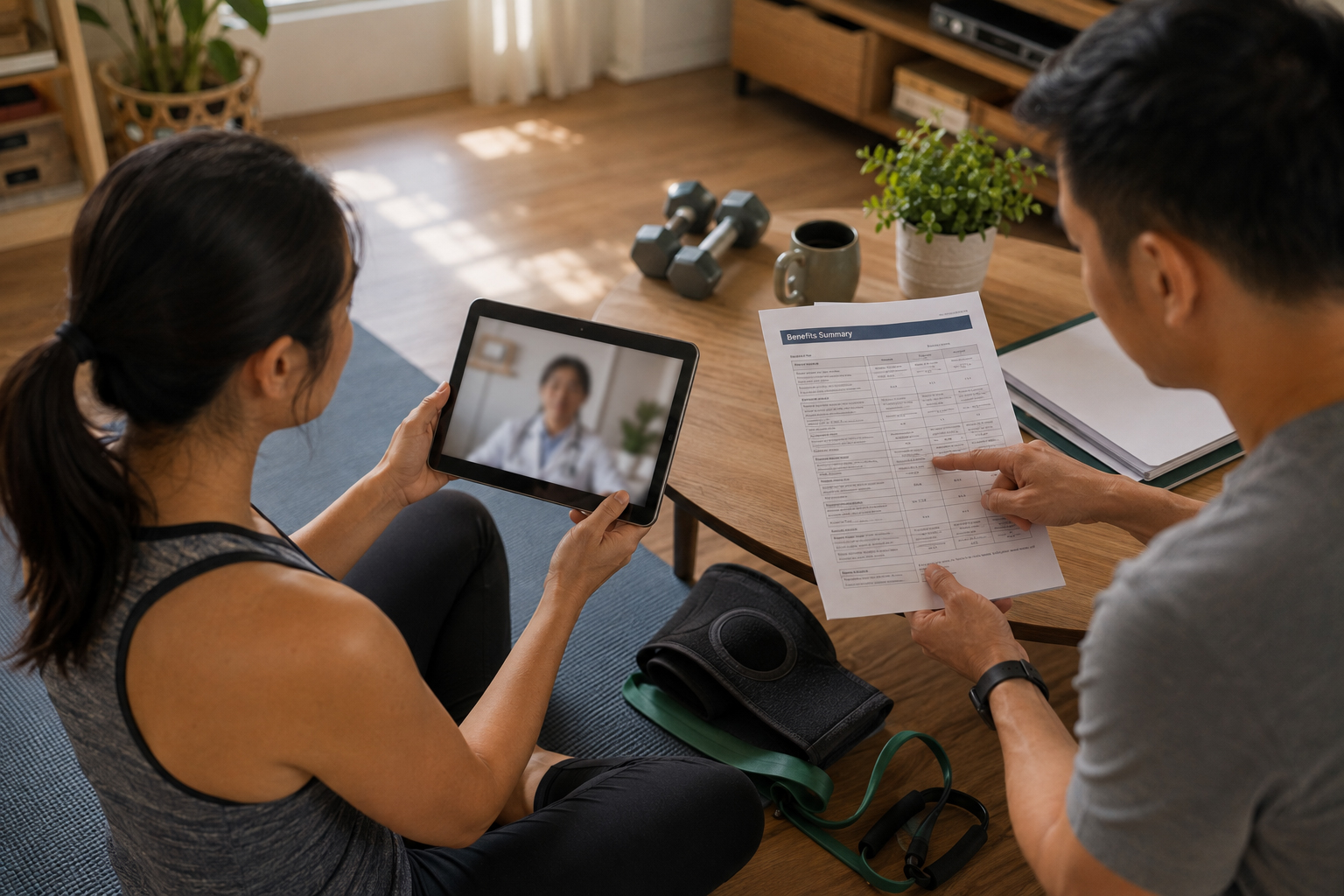
Many people who work out at home assume their health plan only matters for big emergencies. Yet telehealth, physical therapy and durable medical equipment can all influence recovery after a home workout injury. Understanding how these services are covered helps you avoid surprises and choose providers that speed rehabilitation. This article explains the roles of telehealth and rehab services in typical policies and gives practical steps to verify coverage.
Telehealth’s Role in Post-Injury Care
Telehealth often provides fast access to evaluation after a strain or fall during a workout, letting a clinician triage without an urgent care visit. Plans vary on whether virtual visits count as in-network care and whether video exams require a copay or count toward a deductible. Look for policies with broad telehealth networks and clear rules on remote prescriptions and follow-up physical therapy referrals. When telemedicine is covered well, it reduces costs and expedites referrals to appropriate in-person services.
Before you need care, test the telehealth app with your insurer to confirm access and typical wait times. Keep a note of virtual visit billing codes so you can match explanations of benefits later.
Rehabilitation and Durable Medical Equipment Coverage
Rehabilitation, including outpatient physical therapy, is often critical after a workout injury to restore strength and prevent recurrence. Policies differ on the number of covered sessions, preauthorization requirements, and whether home visits or tele-rehab are eligible. Durable medical equipment such as braces, supports, or mobility aids can be covered partly or require a separate durable goods benefit. Verify limits, physician referral rules, and estimated out-of-pocket costs for common rehab services used by active home exercisers.
Ask your provider to submit a treatment plan to the insurer to speed authorization for therapy and devices. Collect invoices and progress notes to support any coverage disputes.
Policy Details to Verify and Actions to Take
Check network rules, deductibles, prior authorization needs, and the differences between urgent care, emergency, and virtual visit coverage. Also confirm how prescription pain management and imaging are billed, as those services often follow initial consultations. If you rely on a personal trainer or coached programs, clarify whether related injuries trigger any exclusions or special claim procedures. Understanding appeal timelines and claim documentation requirements reduces stress if a claim is initially denied.
Keep a simple checklist with insurer phone numbers, claim IDs, and provider contact details in your home fitness area. Regularly review policy updates during open enrollment so your plan keeps pace with how you train at home.
Conclusion
Telehealth and rehab benefits can shape your recovery path after a home workout injury and influence costs. Confirm network access, coverage limits, and prior authorization rules before you need care to avoid surprises. With a small amount of preparation you can make insurance work for a safer and faster return to your home fitness routine.